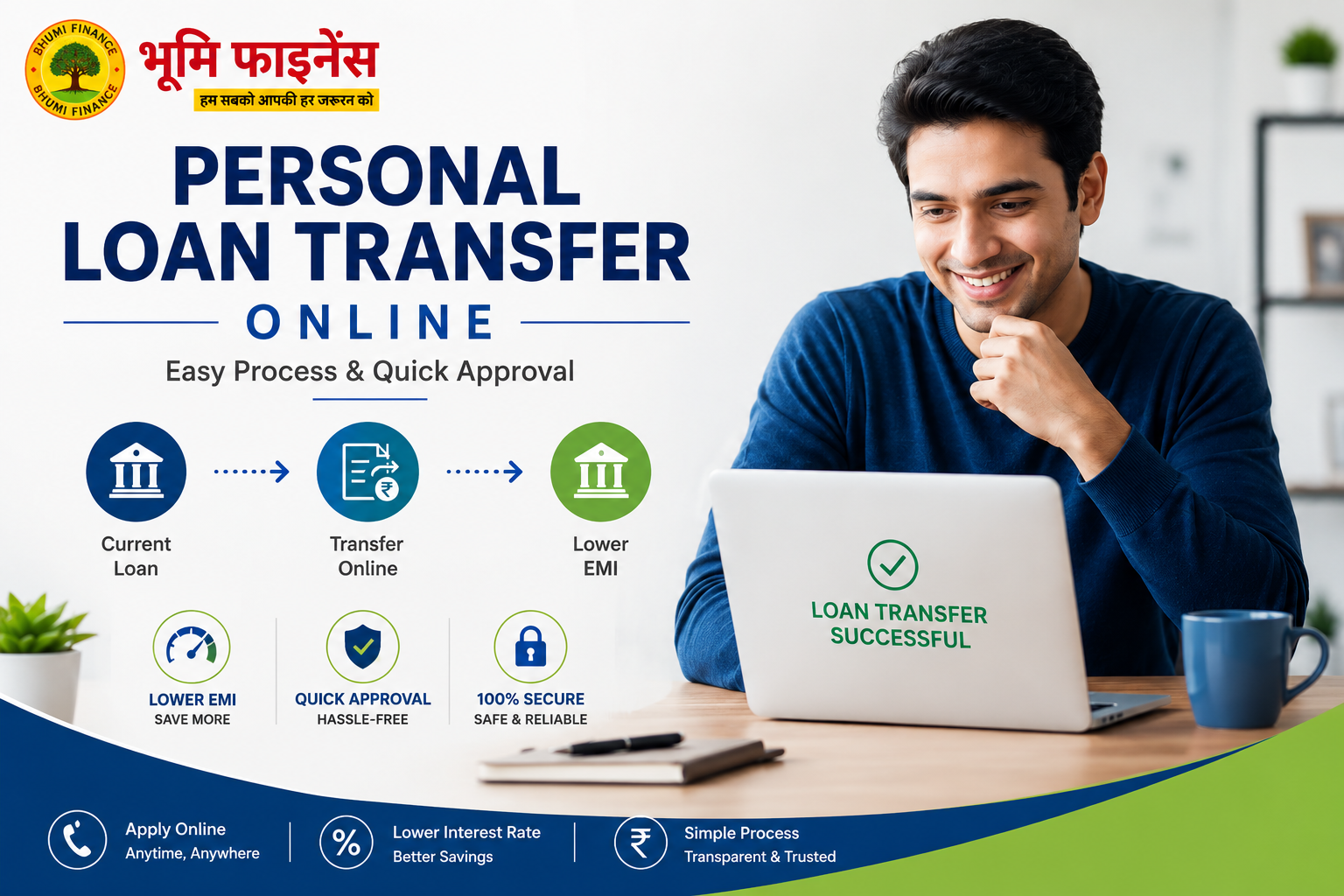
Personal Loan Transfer Online: Easy Process & Quick Approval
Handling a personal loan can get kinda tricky when the interest rates are high, or when those monthly EMIs put real pressure on your budget, you know how it goes. In cases like this, a personal loan transfer can turn out to be a pretty sensible financial move. It basically lets you shift the current loan from your existing lender to another lender, one that may offer better terms and conditions. By doing that, you can potentially cut down the overall cost and keep the repayments running in a more easy, steady way.
What Is a Personal Loan Transfer?
A personal loan transfer, also called a balance transfer is the process of moving your remaining loan amount to a fresh lender. The new lender steps in and settles the outstanding balance with your current lender then you keep repaying under a new loan agreement basically the same obligation but with different terms.
A lot of borrowers pick this route to get some advantage from lower interest rates, more adaptable repayment tenures, or even a smoother experience with customer service.
Benefits of a Personal Loan Transfer
One of the biggest perks of doing a personal loan transfer is, basically, the chance to lower your interest costs. Even a little bump in the interest rates can, over the whole repayment period, turn into pretty meaningful savings.
Other benefits include:
- Lower monthly EMI burden
- Extended repayment tenure if needed
- Better loan features and services
- Possibility of additional funds through a top-up loan
- Improved cash flow management
How to Apply for a Personal Loan Transfer Online
The online process is simple and convenient.
First thing, sort of compare loan transfer offers from a few lenders. Look at the interest rates, processing charges, repayment choices, and also the eligibility terms. See what fits you best, not just the numbers. Then go ahead and submit an online application with the documents they ask for. Usually that includes identity proof, proof of address, income evidence, bank statements and the details of your current loan. After they do verification, the lender checks your application. If you get approved, the remaining loan balance is transferred to the new lender and from there you begin repaying them using the updated terms.
Eligibility Factors
Lenders generally consider several factors before approving a personal loan transfer:
- Consistent repayment history
- Stable income source
- Good credit score
- Existing loan repayment track record
- Employment stability
Maintaining a strong financial profile increases the chances of quick approval and favorable loan terms.
Tips for a Successful Loan Transfer
Before going any further, roughly figure out the total savings first. A lower interest rate can be great but only if the savings are bigger than the processing fees, or any transfer charges that pop up later.
Then, read the loan agreement really carefully and make sure you understand each term and condition, even the small print that feels kind of dull. Also check more than one lender so you can get the most favorable offer that’s actually available to you.
After that, don’t just stop. Keep making payments on your current loan, until the whole transfer process is fully finished, and not “almost” finished.
Conclusion
A personal loan transfer can be a pretty effective way to lower your borrowing costs and also make paying your loan back feel more manageable. With online applications, quicker processing, and those fairly competitive interest rates, shifting your personal loan has become easier than it was. When you compare the offers and really get the costs involved clear, you can pick a solution that backs your money plans, while giving you more repayment flexibility along the way.
FAQs
1. How long does a personal loan transfer take?
Usually a few days, depending on the lender's verification process.
2. Can I transfer my loan more than once?
Yes, if you meet the eligibility requirements of the new lender.
3. Does a loan transfer affect my credit score?
A properly managed transfer generally has minimal impact on your credit score.
4. Is a guarantor required for a personal loan transfer?
In most cases, no, but requirements vary by lender.
5. Can self-employed individuals apply for a loan transfer?
Yes, many lenders offer loan transfer facilities to self-employed applicants.