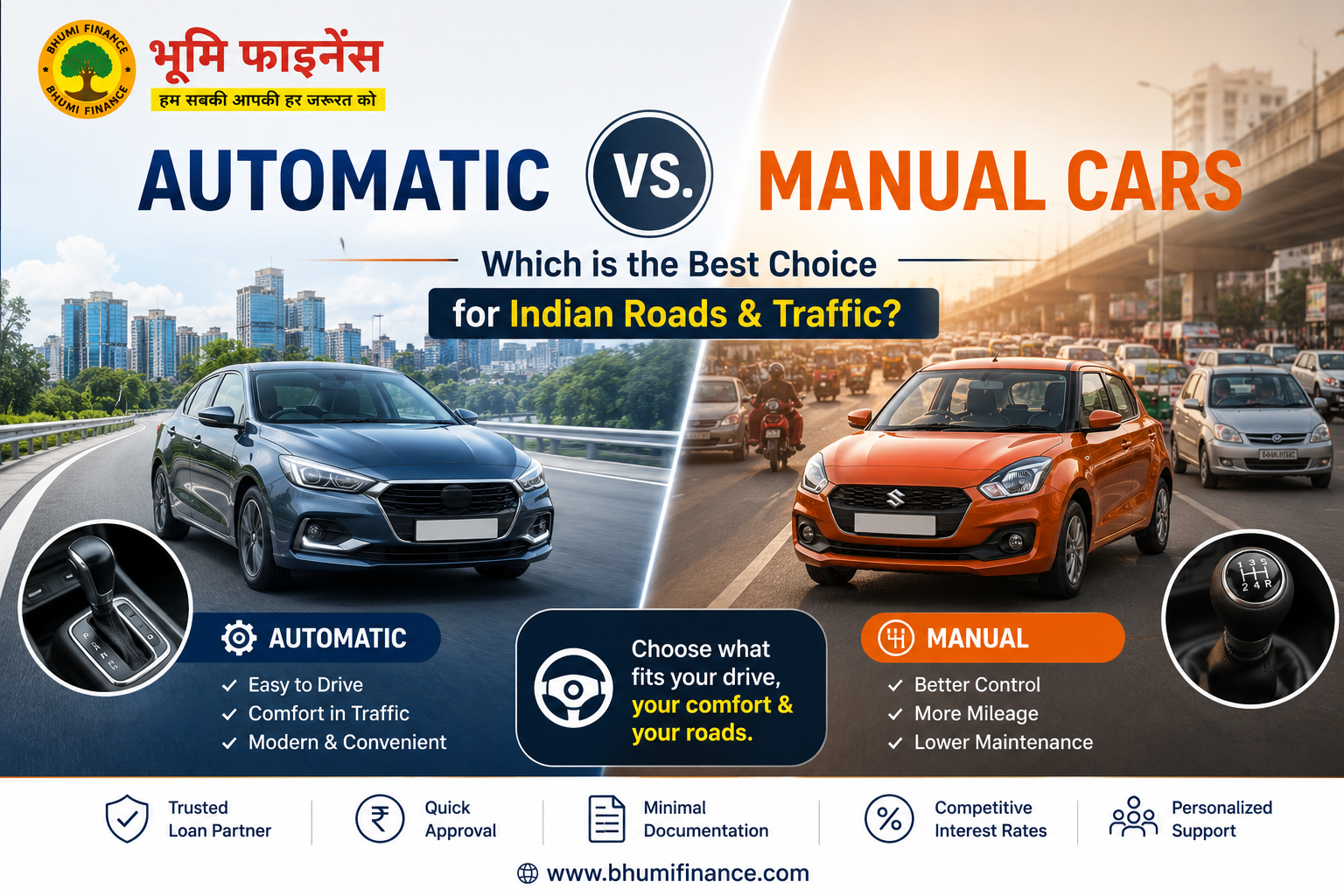
Automatic vs. Manual Cars: Which is the Best Choice for Indian Roads & Traffic?
Buying a car in India involves more than choosing a brand, model, or budget. One important decision is choosing between an automatic and a manual transmission. This choice can have a major impact on your daily driving experience, especially when you regularly travel through busy city roads and heavy traffic.
Manual cars have traditionally been popular in India because they are affordable and give drivers greater control. Automatic cars, on the other hand, are becoming increasingly popular because they offer convenience and make driving in congested traffic easier.
If you are planning to buy a new or used car, understanding the difference between these two options can help you make a better decision.
What Is a Manual Car?
A manual car requires the driver to operate the clutch and change gears manually. The driver selects the appropriate gear according to the speed, road conditions, and driving situation.
Manual cars are generally more affordable than their automatic counterparts. They are also widely available in the Indian market, making them a practical option for budget-conscious buyers.
For experienced drivers, manual cars can offer better control, particularly when driving on slopes, rough roads, or highways. However, frequent clutch operation can become tiring during long periods of stop-and-go traffic.
What Is an Automatic Car?
An automatic car changes gears automatically according to the vehicle's speed and driving conditions. The driver generally only needs to use the accelerator and brake pedals.
This makes automatic cars particularly convenient for city driving. When traffic moves slowly, drivers do not have to repeatedly press the clutch and change gears.
Automatic cars can therefore be a good choice for people who travel regularly through congested areas and want a more comfortable driving experience.
Automatic vs. Manual Cars: Key Differences
The main difference between automatic and manual cars is how the transmission operates. A manual car requires active involvement from the driver, while an automatic car handles gear changes automatically.
Manual cars generally have a lower purchase price. Depending on the model and usage, maintenance can also be relatively straightforward.
Automatic cars usually cost more than comparable manual variants. However, the added convenience can make them worthwhile for drivers who frequently face traffic congestion.
Fuel efficiency depends on several factors, including the engine, transmission technology, driving style, road conditions, and vehicle model. Therefore, buyers should compare the actual mileage of specific cars rather than assuming one transmission will always be more economical.
Which Is Better for Indian City Traffic?
For heavy city traffic, an automatic car can be a more comfortable option. Indian cities often experience traffic jams, frequent stops, crowded roads, and slow-moving traffic.
In a manual car, continuously pressing the clutch and changing gears can become tiring, particularly during long commutes. An automatic transmission reduces this effort and allows drivers to focus more on the road.
However, manual cars can still be a suitable option for people who drive during less congested hours or prefer having greater control over gear selection.
If you are planning to purchase a second-hand automatic car for city driving, financing options such as a Used Car Loan in Varanasi can help eligible buyers manage the cost of purchasing their preferred vehicle.
Which Is Better for Highway Driving?
Both automatic and manual cars can perform well on highways.
Manual cars allow drivers to select gears according to road conditions. This can be useful when climbing slopes, overtaking, or driving through challenging terrain.
Automatic cars can make long-distance journeys more convenient because they reduce the need for constant gear changes. Modern automatic transmissions can also provide smooth acceleration and comfortable highway performance.
Therefore, your choice should depend on your driving habits, travel frequency, and personal preferences.
Automatic vs. Manual: Cost and Maintenance
The purchase price is another important factor when choosing between automatic and manual cars.
Manual cars generally have a lower starting price than similar automatic variants. This makes them attractive to buyers who are working with a limited budget.
Automatic cars may require a higher initial investment. Depending on the transmission type and vehicle model, repairs can also sometimes be more expensive.
For used-car buyers, maintenance history is particularly important. Before purchasing a pre-owned car, check the vehicle's service records and inspect the transmission carefully.
If the purchase requires financing, a Used Car Loan in Varanasi can provide an option for eligible buyers to spread the vehicle cost over a suitable repayment period, depending on the lender's terms.
Should You Buy a Used Automatic or Manual Car?
A used car can be an excellent option if you want to purchase a vehicle at a lower price than a new one. However, you should carefully inspect the car before making a purchase.
For a used manual car, check the clutch, gear shifting, transmission noise, engine performance, and service history. A worn clutch may require replacement and add to your ownership expenses.
For a used automatic car, pay attention to gear changes, unusual sounds, jerking, delayed acceleration, and warning lights. A professional inspection can help identify potential transmission problems.
If you have found the right pre-owned car but need financial assistance, exploring a Used Car Loan in Varanasi can help you understand available financing options and determine whether the vehicle fits your budget.
Automatic vs. Manual: Which One Should You Choose?
There is no single answer because the best option depends on your lifestyle and driving requirements.
An automatic car may be better for you if you regularly drive through busy city roads, spend considerable time in traffic, or want a convenient and relaxed driving experience.
A manual car may be more suitable if you want a lower purchase price, prefer direct control over gear selection, or frequently drive on roads where manual transmission works well.
If you are purchasing a used vehicle, consider the car's age, condition, maintenance history, transmission performance, fuel efficiency, and expected repair costs before making your final decision.
You can also explore a Used Car Loan in Varanasi if you need financing for a pre-owned vehicle and meet the applicable eligibility requirements.
What Should You Consider Before Buying?
Before choosing between an automatic and manual car, think about where you drive most often. If your daily commute involves heavy traffic, an automatic car may provide greater comfort.
If you mainly drive on highways, rural roads, or less congested routes, a manual car may be a practical and cost-effective option.
Your budget should also be considered. Do not only look at the purchase price. Consider fuel costs, insurance, servicing, maintenance, and potential repairs.
For used-car buyers, financing is another factor to consider. A suitable Used Car Loan in Varanasi may help you purchase a reliable pre-owned car without paying the complete cost upfront, subject to lender eligibility and applicable terms.
Final Thoughts
Both automatic and manual cars can be suitable for Indian roads. Automatic cars are especially convenient in heavy traffic, while manual cars remain popular because of their affordability and greater driver involvement.
The right choice depends on your budget, daily commute, road conditions, driving habits, and maintenance expectations.
If you are planning to buy a second-hand car, take time to inspect the vehicle, verify its service history, compare different models, and understand the overall ownership cost. If financing is required, a Used Car Loan in Varanasi can be considered as one option for eligible buyers.
Ultimately, the best car is not necessarily the one with the latest transmission. It is the one that suits your driving needs, budget, and everyday lifestyle.
FAQs
1. Which is better for Indian traffic, automatic or manual?
Automatic cars are more convenient in heavy traffic as they reduce clutch and gear operation.
2. Are automatic cars more expensive than manual cars?
Yes, automatic variants generally cost more than comparable manual variants.
3. Is an automatic car good for long-distance driving?
Yes, automatic cars can make long-distance driving more comfortable and convenient.
4. Are manual cars more economical?
Manual cars usually have a lower purchase price, but fuel efficiency depends on the vehicle and driving conditions.
5. Should I buy a used automatic car?
Yes, if the car is well-maintained and its transmission is in good condition.
6. What should I check in a used manual car?
Check the clutch, gears, engine, service history, brakes, and overall condition.
7. What should I check in a used automatic car?
Check gear shifting, unusual sounds, jerking, warning lights, and transmission condition.
8. Can I get financing for a second-hand car?
Yes, eligible buyers can explore suitable used-car loan options.
9. Is an automatic car suitable for Indian roads?
Yes, especially for drivers who frequently travel in busy city traffic.
10. How can a Used Car Loan in Varanasi help?
It can help eligible buyers finance a pre-owned car instead of paying the full amount upfront.