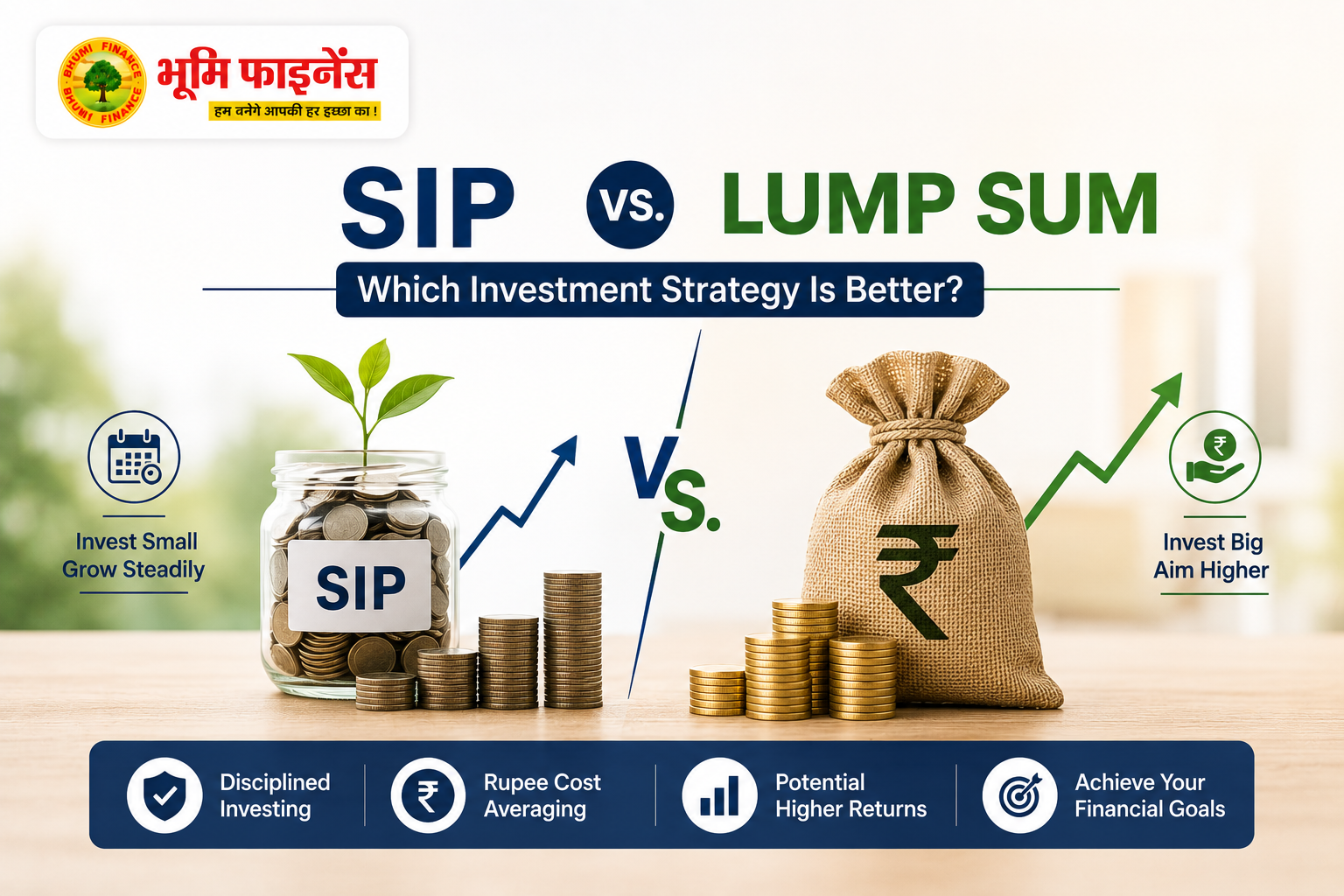
SIP vs. Lump Sum: Which Investment Strategy Is Better?
Investing your money wisely can help you work towards long-term financial goals. However, choosing the right investment strategy can be challenging, especially when deciding between SIP and lump sum investment. Both approaches have their own advantages, and the right choice depends on your income, financial goals, risk appetite, available funds, and investment horizon.
Along with investments, people may also need funds for education, business expansion, emergencies, or other financial requirements. In such situations, understanding available borrowing options is equally important. For individuals looking for secured funding, a Loan Against Gold in Varanasi can be one option to explore. Similarly, borrowers comparing lenders may search for the Best Gold Loan in Varanasi before making a financial decision.
What Is SIP Investment?
A Systematic Investment Plan, commonly known as SIP, allows investors to invest a fixed amount in a mutual fund at regular intervals, usually every month. Instead of investing a large amount at one time, you contribute smaller amounts consistently.
For example, if you invest ₹5,000 every month, the amount is automatically invested according to your selected SIP schedule. When market prices are lower, your investment may purchase more units, while higher prices may result in fewer units. This is commonly associated with rupee-cost averaging.
SIP can be suitable for people who have a regular income and want to develop a disciplined investment habit. It can also be useful for investors who are starting with a smaller amount and gradually want to build their portfolio.
What Is Lump Sum Investment?
A lump sum investment means investing a larger amount of money at one time. For example, someone who receives a bonus, maturity amount, inheritance, or has accumulated savings may choose to invest that money in a mutual fund in one transaction.
The biggest difference between SIP and lump sum is the timing of investment. SIP spreads investments over several dates, while lump sum puts the available money into the market at once.
If the market performs well after a lump sum investment, the investor may benefit because the complete amount was invested from the beginning. However, if the market falls shortly after the investment, the portfolio may experience a significant decline.
Therefore, lump sum investment can require a higher tolerance for short-term market volatility.
SIP vs. Lump Sum: Understanding the Difference
The SIP vs. lump sum decision should not be based only on which method appears to offer higher returns. Both methods work differently and suit different financial situations.
SIP is generally associated with regular investing. It can be convenient for salaried individuals and professionals who receive a predictable monthly income. Investors do not need to wait until they accumulate a large amount of money.
Lump sum investment may be more suitable for someone who already has substantial capital available. Instead of investing gradually, the investor gets immediate market exposure.
The choice between SIP and lump sum should therefore be based on your financial circumstances rather than following someone else's investment strategy.
Benefits of SIP
One of the biggest advantages of SIP is financial discipline. Investing a fixed amount every month can encourage consistency and make investing part of your regular financial routine.
SIP can also reduce the need to constantly monitor the market and identify the perfect entry point. Since investments are made at regular intervals, purchases take place across different market conditions.
Another advantage is accessibility. Investors can often begin SIPs with relatively small amounts, depending on the mutual fund scheme. This makes SIP a practical option for people who are at the beginning of their investment journey.
However, SIP does not guarantee profits. Mutual fund investments are subject to market risks, and the value of investments can rise or fall.
Benefits of Lump Sum Investment
Lump sum investment provides immediate exposure to the market. If you have a large amount of money available and have a long investment horizon, investing it at once may allow the entire capital to participate in potential market growth.
This approach can be particularly relevant when someone receives a large amount through a bonus, sale of an asset, maturity proceeds, or other sources.
However, timing becomes more important. If the market declines immediately after investing, the investor could see a substantial short-term reduction in portfolio value.
For this reason, investors considering lump sum investment should understand their risk tolerance and investment objectives before committing a large amount.
Which Strategy Is Better for You?
There is no simple answer to whether SIP or lump sum is better. Your decision should depend on your income, financial goals, available capital, investment horizon, and ability to handle market fluctuations.
If you earn a regular salary and have limited surplus funds every month, SIP may be a convenient option. It allows you to invest gradually without requiring a large initial amount.
If you already have significant savings available for investment, lump sum may be considered. However, you should evaluate whether you are comfortable with the possibility of short-term market volatility.
Some investors may also combine both strategies. For example, you could continue a monthly SIP while making additional investments when you receive a bonus or have extra savings.
Consider Your Complete Financial Plan
Investment planning should include your emergency fund, existing debts, and overall financial commitments. Before investing, make sure your finances can support both your investment goals and unexpected expenses.
If you need funds and own eligible gold, a Loan Against Gold in Varanasi can be a secured borrowing option. When choosing the Best Gold Loan in Varanasi, compare interest rates, repayment terms, processing charges, and other conditions carefully.
Borrowing to invest in market-linked products can increase financial risk because loan repayments remain due even if investments lose value. Always consider your repayment capacity before taking a loan.
How to Choose a Gold Loan Carefully?
If you are considering a Loan Against Gold in Varanasi, do not focus only on the loan amount offered. Look at the overall cost of borrowing and understand the repayment schedule before signing the agreement.
Compare the interest rate, processing fees, tenure, repayment flexibility, valuation process, loan-to-value ratio, and applicable charges. Reading the terms carefully can help you understand your financial obligation.
People searching for the Best Gold Loan in Varanasi should also consider the lender's transparency and service process. A suitable lender should clearly explain the loan terms and charges before the borrower proceeds.
Your borrowing decision should be based on your actual financial requirement and repayment capacity.
SIP and Lump Sum: A Practical Approach
When comparing SIP vs. lump sum, investors should focus on their personal circumstances. SIP may work well for people who want to invest regularly from their monthly income. Lump sum may be considered by people who already have a substantial amount available.
The investment horizon also matters. Long-term investors may have more time to manage temporary market fluctuations, while people with short-term financial goals may need to be more cautious.
Risk tolerance is another important factor. If market fluctuations make you uncomfortable, investing gradually may feel more manageable. If you have sufficient capital and can tolerate short-term volatility, lump sum may be worth considering.
There is also no requirement to choose only one strategy. A combination can sometimes help investors maintain regular contributions while using surplus funds when appropriate.
Why Financial Planning Matters
Whether you choose SIP or lump sum, the most important factor is consistency and suitability. Investments should align with your financial objectives rather than being based entirely on market trends or short-term expectations.
Similarly, if you need funds and are considering a Loan Against Gold in Varanasi, make sure the loan fits your repayment capacity. A gold loan can provide access to funds, but it also creates a repayment obligation.
Those searching for the Best Gold Loan in Varanasi should compare lenders carefully instead of choosing an option solely because of a promotional interest rate. Understanding the complete terms can help you make a more informed borrowing decision.
Conclusion
SIP and lump sum offer different ways to invest. SIP suits regular investors, while lump sum may work better for those with larger available funds. The right choice depends on your goals, investment horizon, and risk tolerance.
If considering a Loan Against Gold in Varanasi, review the interest rate, repayment terms, and charges carefully. When searching for the Best Gold Loan in Varanasi, compare the complete loan terms before making a decision. Good financial planning means choosing options that match your needs and repayment capacity.
Frequently Asked Questions
1. Is SIP better than lump sum investment?
Neither is automatically better. SIP may suit regular investors, while lump sum may suit people with a larger amount available for investment.
2. What is SIP?
SIP allows investors to invest a fixed amount in a mutual fund at regular intervals, generally every month.
3. How does one make a lump-sum investment?
Investments in mutual funds in lump sums refer to large investments at a single time.
4. Can I use both SIP and lump sum?
Yes. Investors can maintain regular SIP investments and make additional lump sum investments when they have surplus funds.
5. Does SIP guarantee returns?
No. SIP investments in mutual funds are subject to market risks and do not guarantee returns.
6. What is a Loan Against Gold in Varanasi?
A Loan Against Gold in Varanasi is a secured loan where eligible gold assets are pledged as
security against the borrowed amount.
7. How can I find the Best Gold Loan in Varanasi?
To find the Best Gold Loan in Varanasi, compare interest rates, repayment terms, processing charges, loan tenure, eligibility, and other applicable conditions.
8. Can I take a gold loan for investment?
Although borrowed funds can be used for various purposes depending on the lender's terms, using a loan for market-linked investments involves additional financial risk.
9. What should I consider before taking a gold loan?
Consider the interest rate, total repayment amount, processing charges, tenure, repayment schedule, and your ability to repay the loan.
10. Should beginners choose SIP or lump sum?
Beginners with regular income may find SIP easier because it allows them to start investing gradually and develop financial discipline.